Loch Lomond Arms Reopens as a Welcoming Village Inn in Luss
·5 min read
A reason to stop in Luss
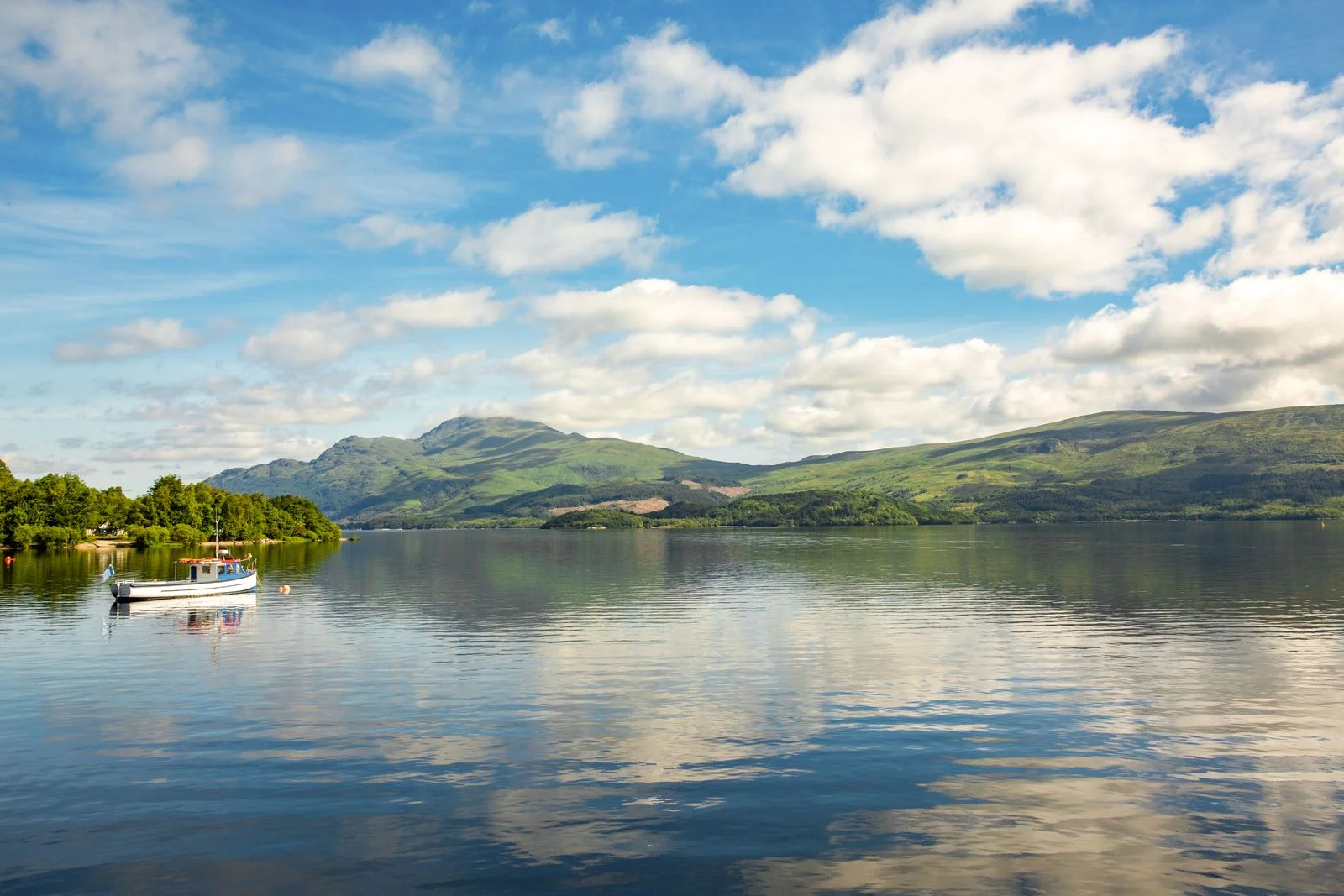
Loch Lomond is famous enough to have its own folk-song chorus, but many visitors see little more than a flash of water from the A82 on their way north from Glasgow. Even Luss, with its sandstone cottages, climbing roses and slate roofs, has often been a brief detour: a walk to the pier, perhaps an ice cream, then back in the car.
That makes the newly reopened
Loch Lomond Arms more than a fresh place to sleep. In a village of about 120 people, the 17th-century former coaching inn has been a local pub for generations. After a six-month renovation, it’s now making a case for Luss as a destination in its own right. When I arrived on a sunny late-summer weekend, day-trippers and hikers filled the lanes, while locals kept slipping through the inn’s yellow, antler-framed door. That’s a promising sign for a hotel trying to feel part of its village.
Photo: Getty Images
The project comes from Patrick Colquhoun, whose family has held the 45,000-acre Luss Estate for more than 800 years. Colquhoun is the son of the current Clan Colquhoun chief; the name is pronounced “ka-hoon.” He brought in British designer Russell Sage, known for his work on The Fife Arms, the art-filled Victorian hotel in Braemar backed by Hauser & Wirth.
Here, Sage’s brief was deliberately restrained. “I said right from the outset, it’s a coaching inn and it’s a pub—we’re not trying to be a five-star hotel,” he told me. Colquhoun wanted the food, design and welcome to merit comparison with a grand hotel, while keeping the place open to residents. That balance is more interesting than another expensive Highland hideaway: the inn’s appeal depends on whether its polish can coexist with the everyday life of the village.
Photo: Courtesy of the Loch Lomond Arms
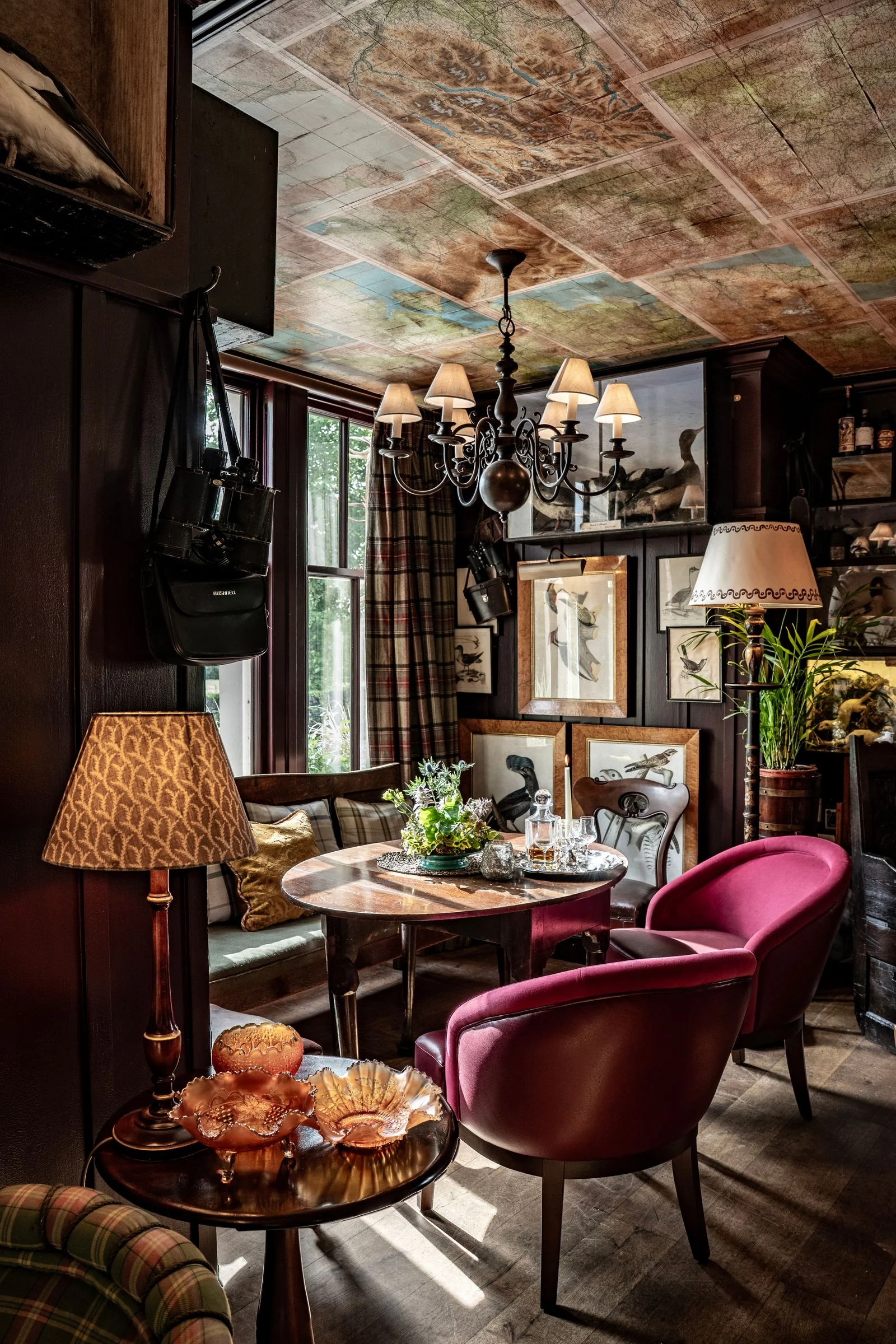
The welcome makes the intention clear. There’s no reception desk. Instead, a member of the mostly local staff, dressed in a butterscotch-yellow waistcoat, greeted me and led me to the Map Room, a snug furnished with pink velvet chairs and antique tables. Vintage hand-drawn maps, inherited from Colquhoun’s grandfather, cover the ceiling.
After three connecting flights to Glasgow and a punishing week that had left me feeling unwell, I appreciated the lack of ceremony. In my room, a dram of Scotch and a plate of cheese straws were waiting beside the bed. I opened the window, settled onto a super-king four-poster and promptly fell asleep. Sometimes the most persuasive hotel review is a nap.
Photo: Courtesy of the Loch Lomond Arms
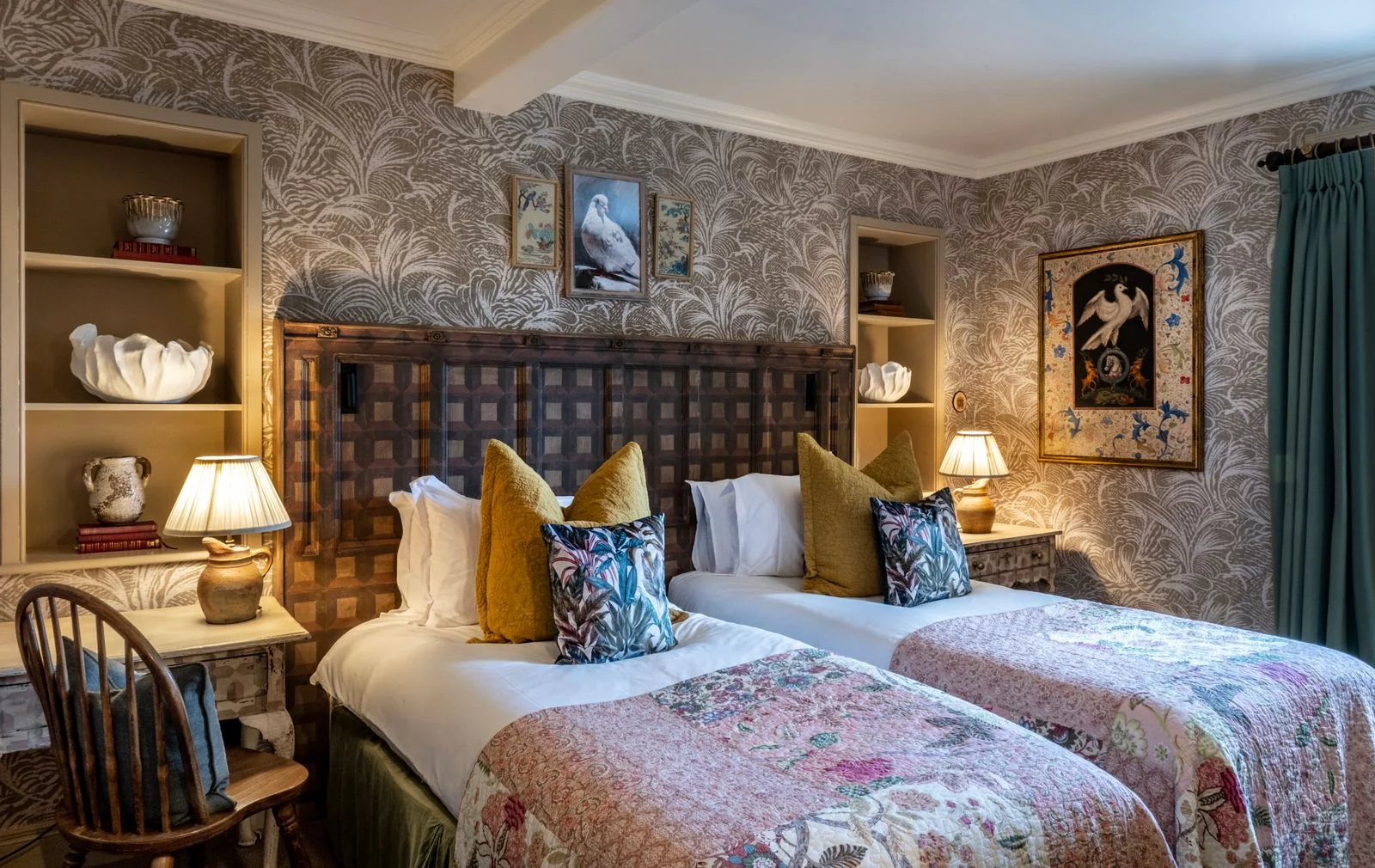
The inn has 15 bedrooms, each named for a character or episode from the Colquhoun family story. Sage and his team drew on eight centuries of family archives, attics and outbuildings to shape them. Colquhoun joked that 15 rooms was about right: “If we had 30 we might have run out of colorful relatives!” The rooms start at what the article describes as a remarkably reasonable rate, though it gives no price.
Photo: Courtesy of the Loch Lomond ArmsPhoto: Courtesy of the Loch Lomond Arms
A family archive turned into a place to stay
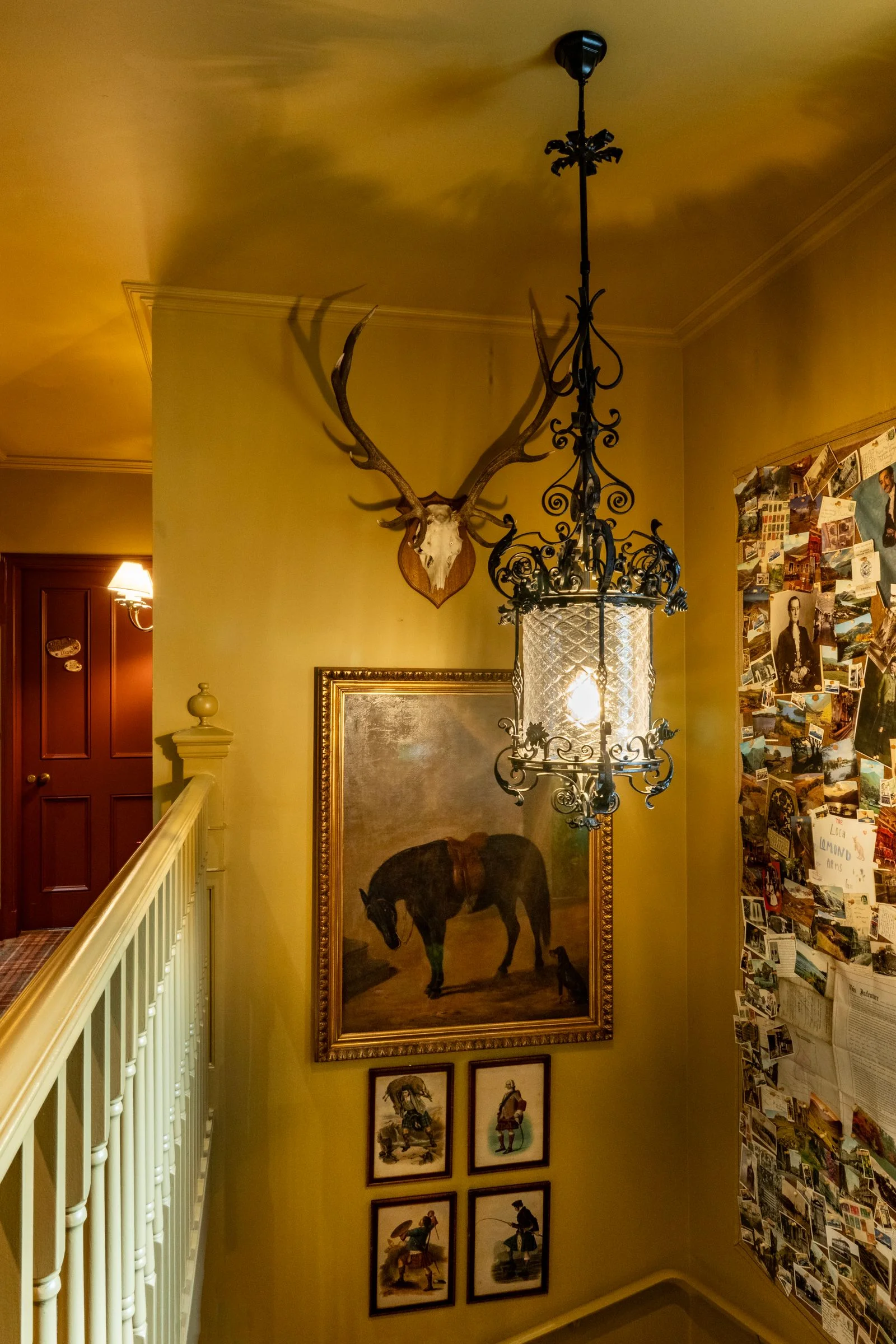
The Loch Lomond Arms makes its history part of the experience, and that’s more than a decorating trick. In my ocean-blue suite, tartan and keepsakes framed a view over Luss. The room is named for Fiona Colquhoun, Patrick’s great-aunt, later the Countess of Arran. In the 1940s, she reportedly drove a group of red-necked wallabies to nearby Inchconnachan in her E-Type Jaguar and set them loose. Their descendants still live on the island. Even the stuffed wallaby left on my bed had a job: leave it out if you want fresh sheets.
The inn’s furnishings carry the same sense of family continuity. Sage’s team restored and hand-painted pieces from the family’s own cupboards rather than filling the rooms with new furniture. The stories behind them are stranger still. A stuffed lion in the hallway recalls Patrick’s great-grandfather, Sir Iain, who took a lion cub to the trenches during World War I and was later court-martialed for keeping a written account of the 1914 Christmas truce. In the eaves, the russet-colored Nova Scotia Love Potion room has cabinetry painted by artist Lizzie Bentley. It honors a 16th-century ancestor remembered as “the last witch in Scotland” after making an illicit potion to seduce his sister-in-law.
[Photo: Courtesy of the Loch Lomond Arms](/articles/529/yly0FIFklEM4oOiPSrCQeG4vdLo37Mwn.webp)
The Countess of Arran gets a room of her own, too. In later life, she walked a pet badger around Luss and, at 62, drove a powerboat at 102 miles per hour, earning the tabloid nickname “the fastest granny on the water.” Patrick says his family had 800 years of history in its archives and a village building that could bring those stories to life. QR codes etched discreetly into the doors let guests read more. The whole place has the makings of a particularly odd Wes Anderson film set beside a Scottish loch.
[Photo: Courtesy of the Loch Lomond Arms](/articles/529/xgRcuObZWYdpEwr16N5KbRnipV78b3ID.webp)
[Photo: Courtesy of the Loch Lomond Arms](/articles/529/O2MKf7XF5arW0Ol3uk4C9KP3oNvV1nMt.webp)
Out into the Highlands, or stay by the fire
The family stories extend beyond the inn. Guests can take the speedboat *Beau Jangles* across the loch to Inchconnachan, zipping between wooded islands and stopping for champagne in the spirit of Lady Arran. I skipped that trip, still recovering from travel, but joined a 4x4 safari into the hills above the village. The route crossed rough tracks, open glens, peatland and native woodland being restored. The conservation work gives the scenery a living quality; this isn’t just a view arranged for visitors.
[Photo: Getty Images](/articles/529/ke0CCi1VQk2yXi68Q4zqYyzy8kWmVV7J.webp)
Still, a quiet afternoon indoors may be the better plan if you’ve come to recharge. The inn’s strongest asset is its local staff. Church beadle John Taylor showed me around Luss, including an 11th-century Viking gravestone in the churchyard—a reminder that visitors have been arriving here for more than a thousand years. He wore a kilt and sporran despite the heat. In the Map Room, Matt led an early-evening tasting beside the fire and could be seen elsewhere in the inn pouring rare Scottish malts and small-batch spirits from the village’s Luss Distillery.
[Photo: Courtesy of the Loch Lomond Arms](/articles/529/LJEVeSVxdvFbEci8644qR9KxWGMXgHln.webp)
A strong finish at the table
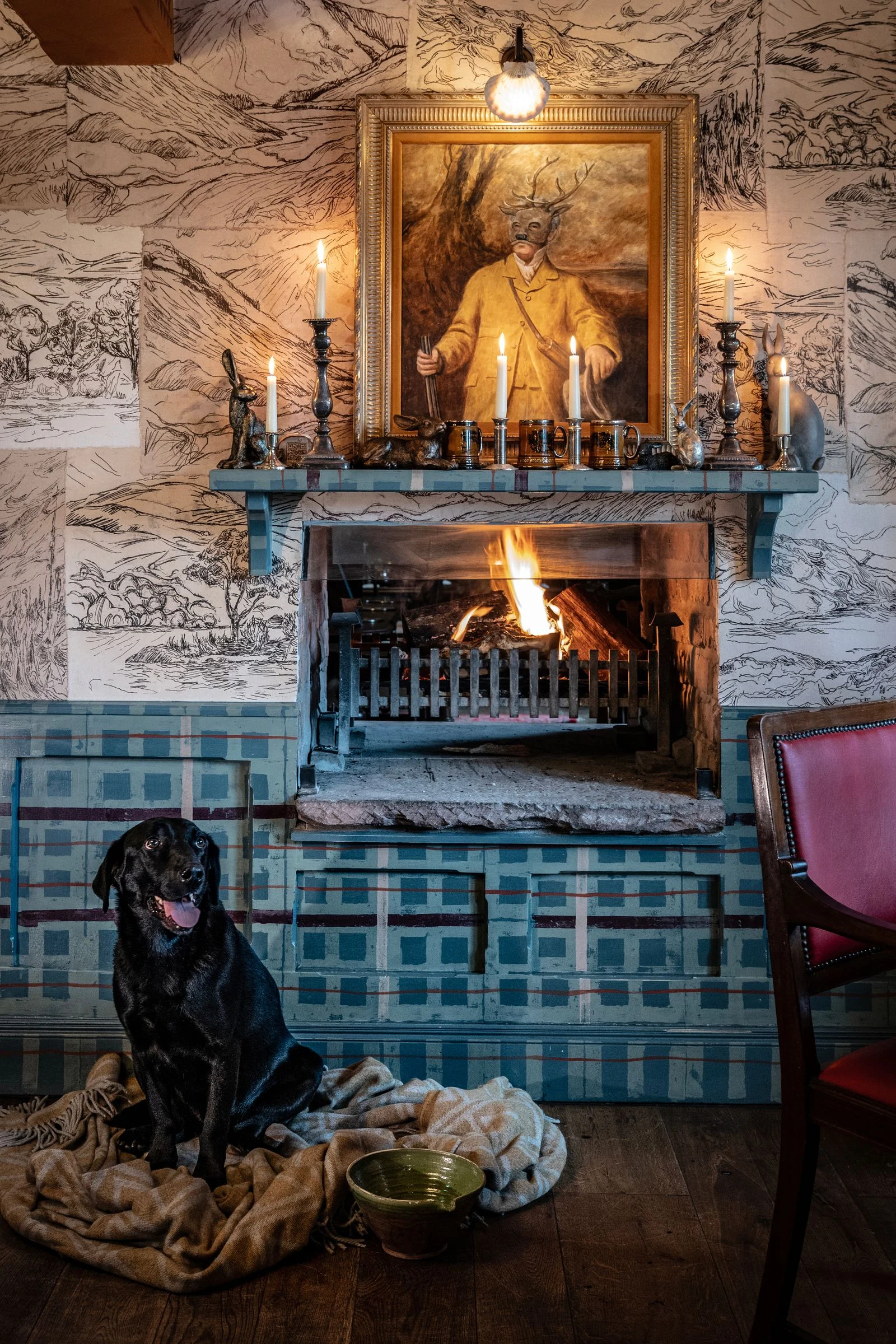
The Stag & Two Hounds, the inn’s busy pub and dining room, serves estate-sourced produce in a space dressed with Trossachs-inspired wallpaper by Dundee artist Freya Cumming. Dinner opened with crisp pork and apple croquettes, followed by house-cured Scottish salmon. The standout was a steak and Lomond ale pie: slow-braised estate beef under buttery pastry, rich with local beer.
There’s more planned for diners. The outdoor tables at The Gathering offer a sunny place to eat, while The Treasury is being prepared as a candlelit fine-dining room behind a curtain, with estate produce served among family heirlooms. Its promise rests on ingredients and setting; the kitchen will have to make the food live up to both.
After 48 hours, I left for Glasgow Airport feeling unexpectedly restored. The Loch Lomond Arms has turned Luss Estates’ family history into a welcoming stay, and the estate already rents historic cottages around the village. Its plans to carry the same design-led approach into future projects could make this inn the opening chapter of something larger. For now, the old song’s banks of Loch Lomond have a new reason to look bonnie.