
This excerpt was originally published in Pre Shift, our newsletter for the hospitality industry. Subscribe for more first-person accounts, advice, and interviews.
Now Open is a yearlong series celebrating some of 2026’s most exciting new restaurants. Throughout the year, we’ll check in with teams in Chicago, New York City, and Washington, D.C., to hear what it’s really like behind the scenes of a buzzy opening. Then, we’ll host exclusive meals at these restaurants as part of Dinner Party, presented by Capital One. Read along for challenges, candid reflections, and advice from the proprietors behind some of the country’s hottest new openings.
El Camarón Peludo asks its owners to run their restaurant at a different pace. Giovanni Cervantes and Tania Apolinar built their New York reputation in busy, high-volume settings; their new West Village restaurant is designed for guests to stay awhile, over seafood, wine and music. That shift in service is as central to the project as its blend of Mexican mariscos and Spanish influences.
The small, walk-in-only spot is Cervantes and Apolinar’s first full-service restaurant. They developed it with chef Carlos Barrera, whose experience includes Michelin-starred restaurants in Spain and a run of popular New York City pop-ups. The result draws on the partners’ different experiences without letting the culinary references overwhelm the food: seafood and freshness are the point, with preparations ranging from simply grilled prawns to sauced Mexican classics.
The concept took shape through practical constraints and a series of conversations. Cervantes and Apolinar initially considered turning the long, narrow space into another taqueria. Its layout made that plan a poor fit, and they began looking for a way to do something different. Seafood and wine offered a direction; conversations with Barrera, travel in Europe and Mexico, and a shared interest in how tapas bars work helped fill in the details.

A narrow space prompted a new direction
Apolinar says the team did consider a taqueria when assessing the site. But its long shape wouldn’t have supported that format, so they turned toward a seafood-and-wine idea instead. For Cervantes, the change also opened room for conversations with Barrera about the mariscos they wanted to bring to New York and the food they missed from Mexico.
Their European travels gave the discussion another reference point. Cervantes was drawn to the rhythms and feel of European tapas and wine bars, and at one stage wanted to push the restaurant further toward Spain. Apolinar and Barrera pushed back. Cervantes now sees that disagreement as useful: the menu needed Spanish influence, but it also needed to retain the Mexican perspective that gave the idea its identity.
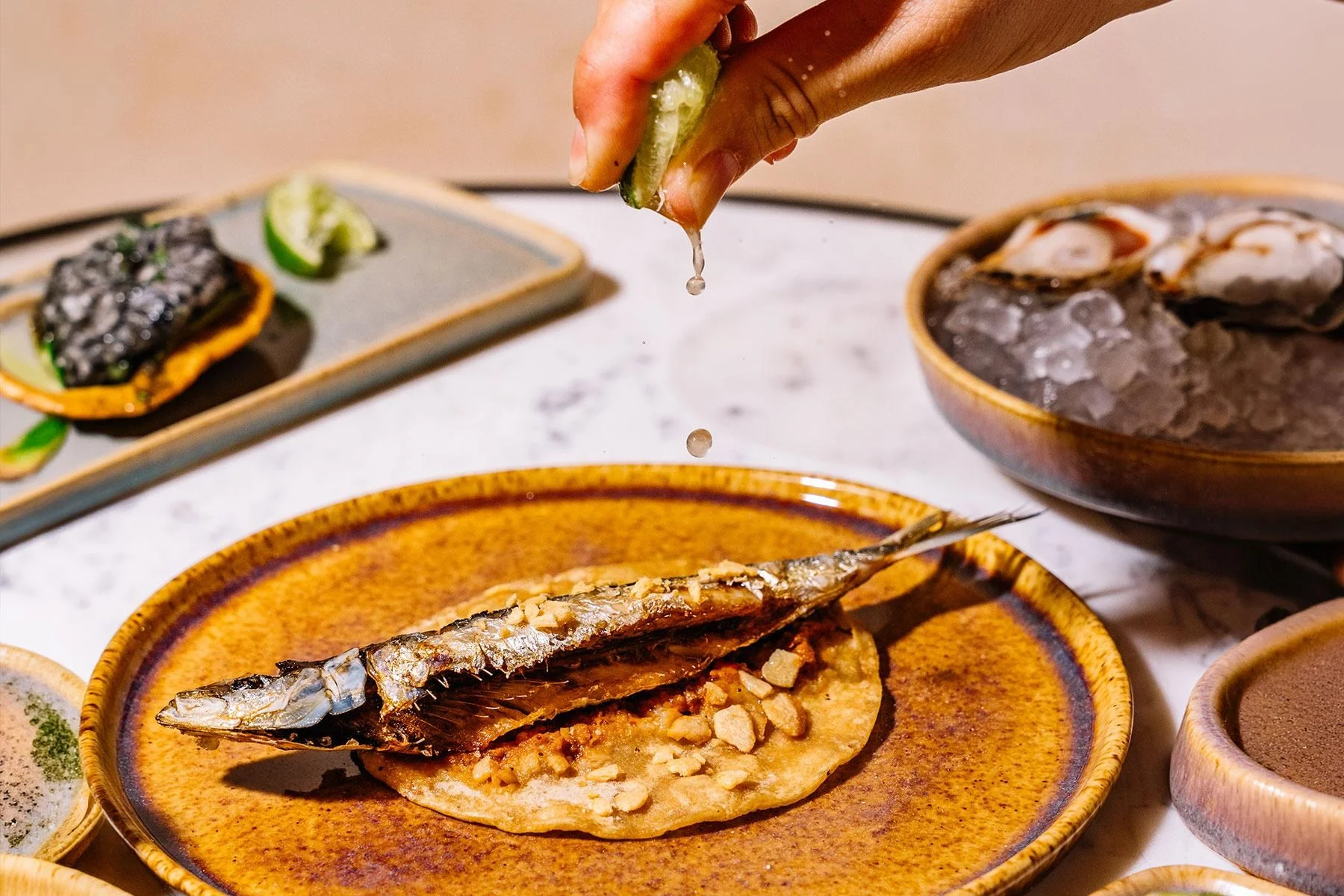
That balance shows up in the dishes rather than in a rigid split between cuisines. Gambas a la plancha keep the preparation simple and let the seafood lead. Carpaccio follows a similar approach. Tuna tostadas and aguachile, by contrast, use more sauces and draw on Mexican classics. The menu’s organizing idea, Apolinar says, is freshness and the quality of the product.
The European influence extends beyond recipes. Cervantes points to the room itself, the atmosphere, and the scale of the plates as part of what the team borrowed from its travels. They want El Camarón Peludo to feel cozy and friendly, with an environment that encourages a longer visit. The small format supports that intention: guests come for seafood and wine, but the experience depends on the way those elements fit together.
A regular became a collaborator
Barrera’s relationship with Cervantes and Apolinar began as a customer at Taqueria Ramírez. He followed the restaurant on Instagram, where he often left comments and flame emojis. The three later discovered they were neighbors in Greenpoint and started seeing one another more often.
A pop-up gave the relationship a working test. Barrera served his Trompo Negro, a version of al pastor built around a smoky black spice paste widely used in Yucatán and nearby regions. The collaboration helped establish their shared footing before they took on a restaurant together. Cervantes says the group found that they worked well together and shared a clear direction.
That history matters because El Camarón Peludo grew out of an existing connection rather than a search for a chef to execute a finished concept. The early conversations about seafood, Mexican cooking and European influences helped define the menu before the team opened the doors. The partners could adjust the idea as they got to know the space, rather than simply transplanting a format from one of their other businesses.

Service shifts from speed to hospitality
The biggest operational change is the amount of time the team spends with each guest. At Taqueria Ramírez and Carnitas Ramírez, success depends on making the food correctly and quickly, then keeping a steady stream of customers moving. Cervantes describes consistency and volume as measures of whether those restaurants are doing their job.
El Camarón Peludo calls for a different kind of attention. Guests may spend an hour or two in the restaurant, giving staff time to make the visit personal and let the music, wine and room shape the meal. Cervantes says watching people enjoy that experience feels comforting after years of working at a faster tempo.
The partners are also managing a broader portfolio. Cervantes credits the long-serving team at Taqueria Ramírez with allowing him to step away from its daily operation. At Carnitas Ramírez, partners Yvon de Tassigny and Kari Boden were expected to handle day-to-day work from the start. That leaves Cervantes and Apolinar focused chiefly on El Camarón Peludo and Socceria, which are newer businesses and require more of their attention.
Apolinar calls the pace tiring, but says she enjoys connecting with customers and seeing how they respond. That’s the measure El Camarón Peludo is adding to a restaurant group known for fast service: whether a slower meal leaves people feeling welcome. Its clearest bet is that seafood, wine and a carefully shaped room can make lingering feel as natural as moving through a busy taqueria.