A playful idea, backed by serious prep
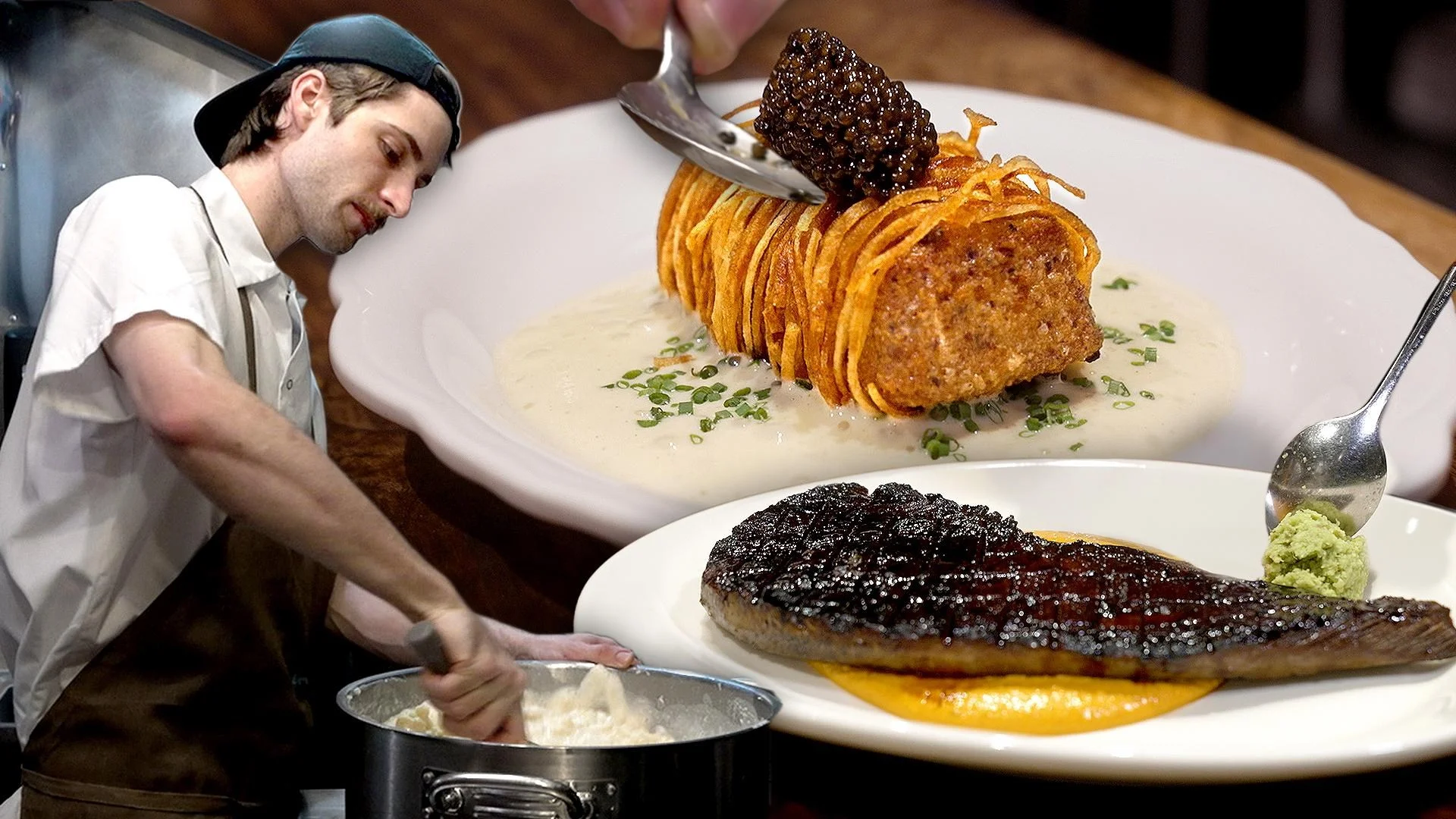
Somssi’s menu makes its point through dishes that pair serious kitchen work with a playful edge. The clearest example is Potato Potato Potato, a caviar-topped, triple-layered preparation that’s become the restaurant’s most popular order even though it demands more labor than any other dish. The kitchen uses as much as 100 pounds of potatoes a week, a striking amount for one ingredient and a clue to how thoroughly this signature shapes the restaurant’s daily work.
“We should have serious food, serious hospitality, but we shouldn’t take ourselves too seriously,” says managing partner Ahris Kim of Na:eun Hospitality’s newest restaurant. That balance is more than a slogan here: the kitchen puts time and technique into a dish whose name has a deliberately goofy repetition. The contrast gives diners an easy entry point, while the execution asks them to pay attention to what’s on the plate.
Building the signature potato
The kitchen starts with Yukon golds, turning them into a puree rich with cream and butter. It presses the mixture into molds and freezes it, giving the filling enough structure for the next stages. Once firm, the potato logs are coated in breadcrumbs, wrapped in thin ribbons of russet potato and fried to order. The result depends on several textures working at once: a soft center, a crisp coating and an outer layer that adds another potato note.
That sequence also explains why the dish takes more work than anything else on the menu. Each step has to serve both the structure and the final bite, and frying it to order means the kitchen can’t simply finish the whole process well ahead of service. The caviar provides a sharp, briny counterpoint to the rich potato base. A familiar ingredient becomes a vehicle for careful construction.
Long cooks, sharp contrasts
Ox tongue follows a different kind of patience. It spends a little over 16 hours in brine, then cooks slowly for four hours with herbs, aromatics and beef tallow. Before grilling, cooks score the large cuts to help them develop a strong sear. The plate starts with romesco, while wasabi sits alongside, setting up a combination of savory depth and sharper, more forceful flavors.
Those long stages give the kitchen time to season and tenderize the tongue before the high heat of the grill adds a browned exterior. The finishing touches matter: romesco offers a rich, peppery base, while wasabi brings a more immediate bite. The dish asks the diner to move between those elements instead of relying on one dominant sauce. A slow cook, then a quick hit of heat.
Pork loin takes another route. Ground shrimp coats the meat for a schnitzel with the savory character of shrimp toast, and a sweet-and-sour plum sauce cuts through its thick, crisp crust. Here, the combination hinges on contrast: a substantial fried coating meets a sauce designed to interrupt its richness. The shrimp isn’t a garnish; it changes the flavor of the coating itself.
For the scallop crudo, pressed scallops sit in strawberry sauce with gooseberries and peppers. Fruit and seafood can make an uneasy pairing if sweetness overwhelms the delicate shellfish, so the peppers and gooseberries have a clear job: they add sharper notes to keep the dish from reading as dessert. The approach is less about novelty for its own sake than about making the acidity and sweetness work around the scallop.
What the menu’s range suggests
Taken together, the dishes show a kitchen working across several kinds of control: labor-intensive shaping, extended cooking, crisp frying and uncooked seafood. The menu’s personality comes from putting those techniques beside unexpected pairings, then keeping the food approachable enough that the ideas don’t overwhelm the meal. That’s a useful balance for a restaurant trying to signal craft without turning every plate into a lecture.
And this is the part most people overlook: the potato dish’s popularity also creates a practical burden. A restaurant can build recognition around a labor-heavy favorite, but the kitchen still has to produce it consistently alongside the rest of the menu. If you’re working in this space, that tension will feel familiar: a signature can define a restaurant and consume a disproportionate share of its prep. Somssi’s answer, at least from these dishes, seems to be variety in technique and flavor rather than a single house style.
The numbers here are underwhelming as a measure of the restaurant’s broader operation; the article offers no sales figures, staffing details or service volume. But the 100 pounds of potatoes a week gives a concrete sense of how much preparation one popular dish can require. This is more significant than it looks: the menu’s playful surface depends on disciplined, repetitive work behind the scenes. Whether that balance holds across a full service is a question the dishes alone can’t settle.
The kitchen’s prep shows Somssi’s range, from a carefully built potato bite to slow-cooked tongue and bright, fruit-led seafood. The common thread is contrast, with texture, temperature and flavor arranged to keep rich dishes from becoming monotonous. Watch the team make these dishes in this episode of Mise En Place.