
Prince Edward Island rewards a food itinerary built around its short distances and strong local supply. In three days, it’s possible to move from oysters and scallops to PEI beef, farm-grown potatoes and ice cream made with milk from nearby dairies, while keeping Charlottetown as a practical base. The island’s seafood reputation is well earned, but the best meals here show how much else the local pantry can support.

PEI is about 140 miles long, and a car makes it easy to connect the capital with fishing villages, beaches and small-town restaurants. That compact scale is a real advantage: a day can include a coastal drive, a long lunch and an evening meal without turning into a road trip. The island’s red soil, working harbors and broad Atlantic views provide the setting; the ingredients provide the reason to stop.
Charlottetown offered a useful home base for a visit that also included Green Gables Heritage Place and the PEI International Shellfish Festival. The island’s food culture reflects Indigenous Mi’kmaq, Acadian, Irish, Scottish and other histories. Its farms and coastal waters sit at the center of that story, with oysters, mussels, lobster, potatoes and beef appearing across very different kinds of menus.

Charlottetown starts with cocktails and comfort food
Most of Charlottetown is reachable on foot in roughly 20 minutes, which makes it easy to build a first evening around a couple of stops. Slaymaker & Nichols, a gastropub and inn on the site of a 19th-century circus, sets a relaxed supper-club mood. Its cocktail program is more considered than the casual setting suggests. The watermelon mule paired hibiscus-infused vodka with pieces of pickled watermelon, a bright match for the creamy lobster dip with tomato and harissa and shrimp pil pil with asparagus.
Drinks: Slaymaker & Nichols
A first lobster roll elsewhere in town proved forgettable, but the night improved at Reddins. The third-floor speakeasy leans into Prohibition-era atmosphere, with vintage furnishings, jazz and a password required at the entrance. Bartender AB explained that the space had once been a pharmacy, where alcohol could be dispensed by prescription during Prohibition. The Pink Canary was the standout: vodka, rose, lychee, citrus and rosé bubbles, served in a small bathtub-shaped glass. It’s playful and sweet, and the presentation is part of the fun.

More drinks: Reddins
Access is part of the ritual: guests need a password when buzzing from downstairs. It’s available online, or the neighbouring hostess can point visitors in the right direction.
Day two connects the capital to Victoria-by-the-Sea
Rain made breakfast at Receiver Coffee a welcome start to the morning. The local roaster’s strong coffee and Earl Grey cream tea were joined by the Ham Slam, a substantial cheddar biscuit layered with a fried egg, Black Forest ham, Swiss cheese and Dijon mayonnaise. It’s the sort of breakfast that can carry a visitor through a day of driving and tasting.
Breakfast: Receiver Coffee


Victoria-by-the-Sea is small even by island standards: it covers about half a square mile and has fewer than 200 residents. Landmark Oyster House occupies a former general store, and its setting is as inviting as its concise, seafood-led menu. Raspberry Point oysters arrived medium-sized, briny and sweet, with lemon and freshly grated horseradish. The combination is simple and effective.
Lunch and sweets: Landmark Oyster House, Island Chocolates
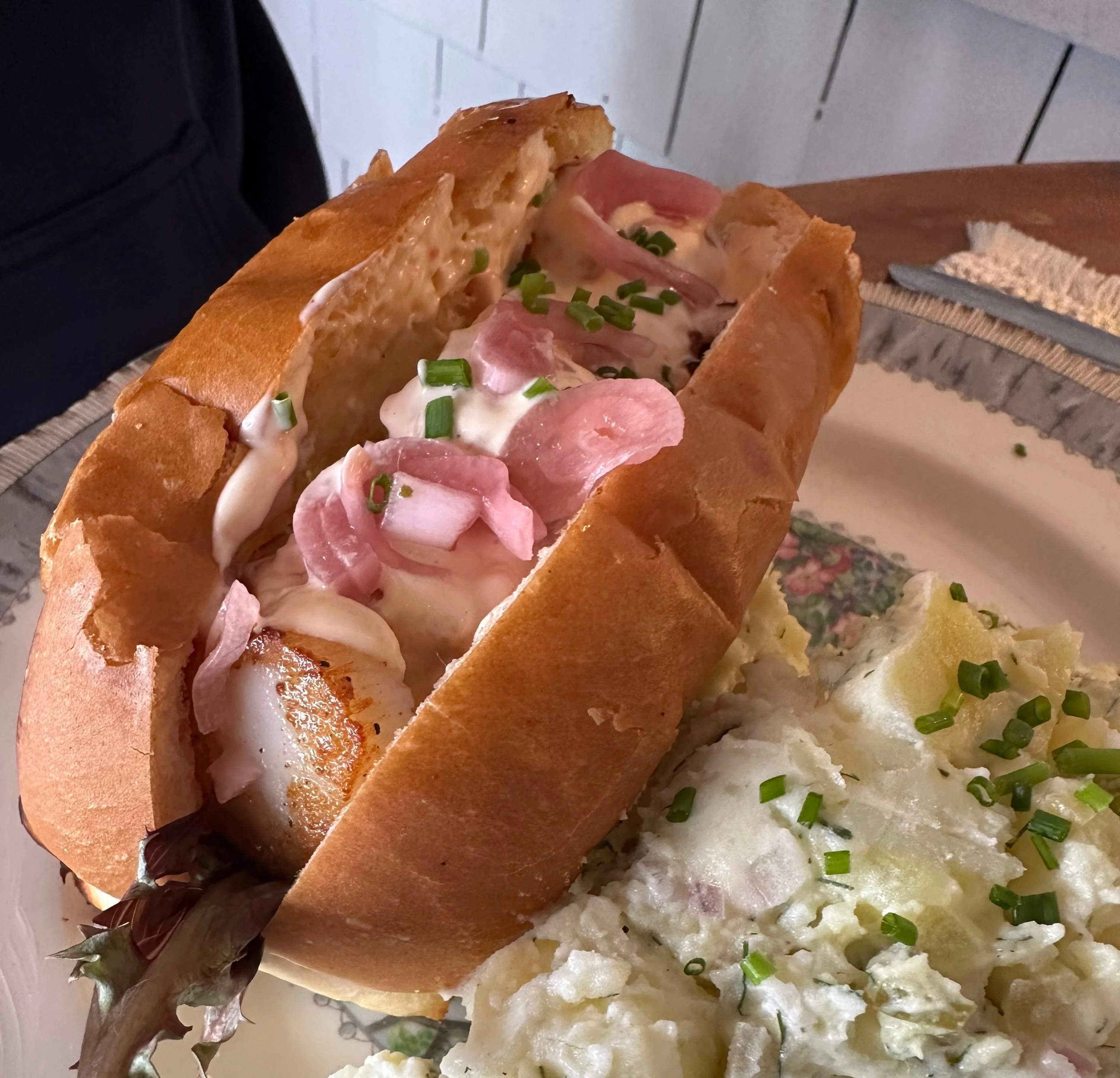
The scallop dog gives the meal a richer counterpoint: sweet scallops, bacon jam, red pepper aioli and pickled shallots tucked into a toasted bun. A notably eggy potato salad rounds it out. After lunch, a stop at the town’s lighthouse and a couple of gift shops leaves room for Island Chocolates, a family-run shop and café. Its handmade bars and truffles often feature local ingredients, including haskap, a berry with notes between blueberry and raspberry. The haskap truffle’s thick milk-chocolate shell makes it an easy souvenir to eat before it reaches home.
The shellfish festival supplied an afternoon’s worth of oysters and clams, with hot buttered lobster rolls among the draws. One useful lesson from the day: PEI’s seafood can be excellent in both polished restaurant settings and festival stalls, where the focus is on fresh product and generous portions.
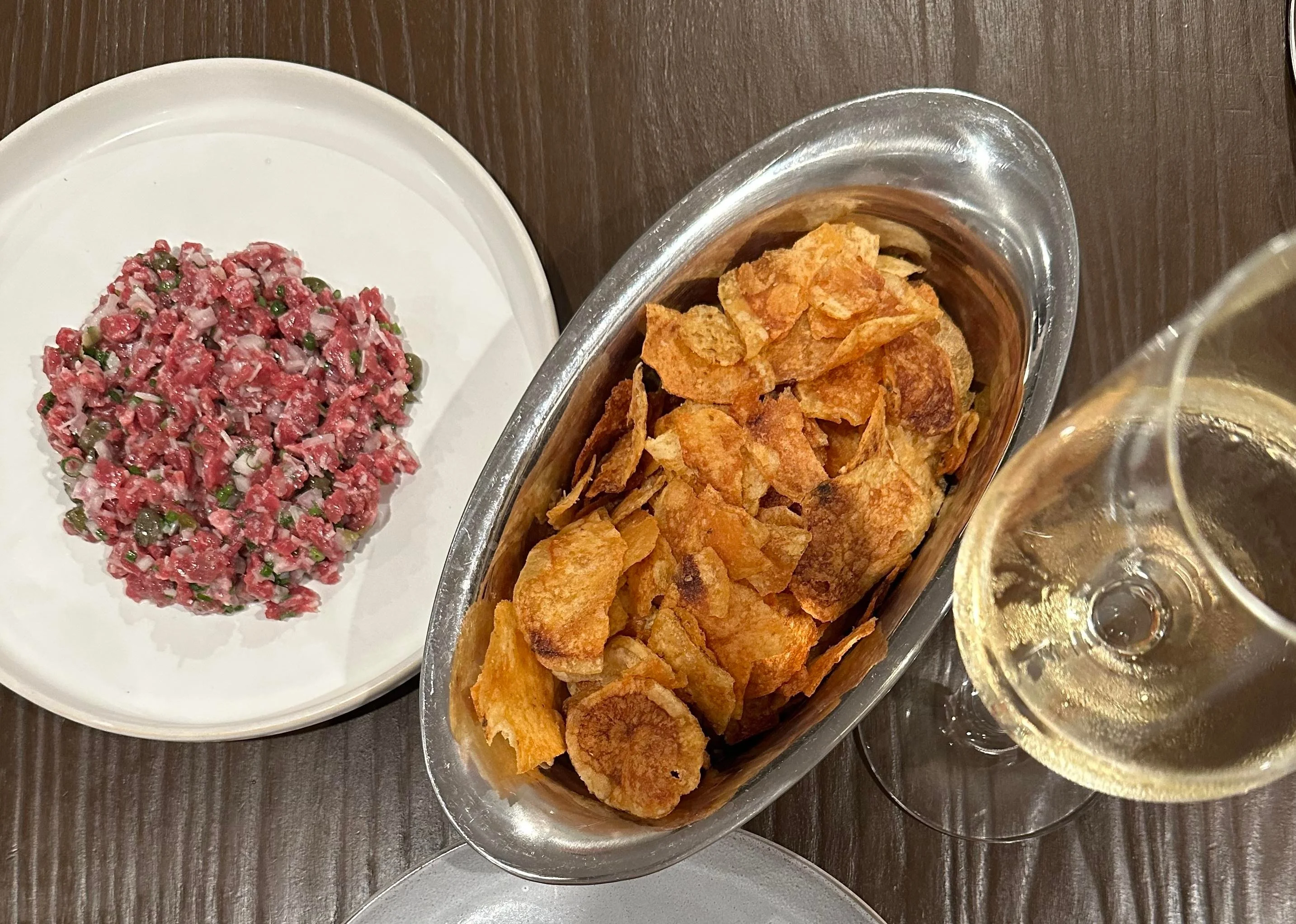
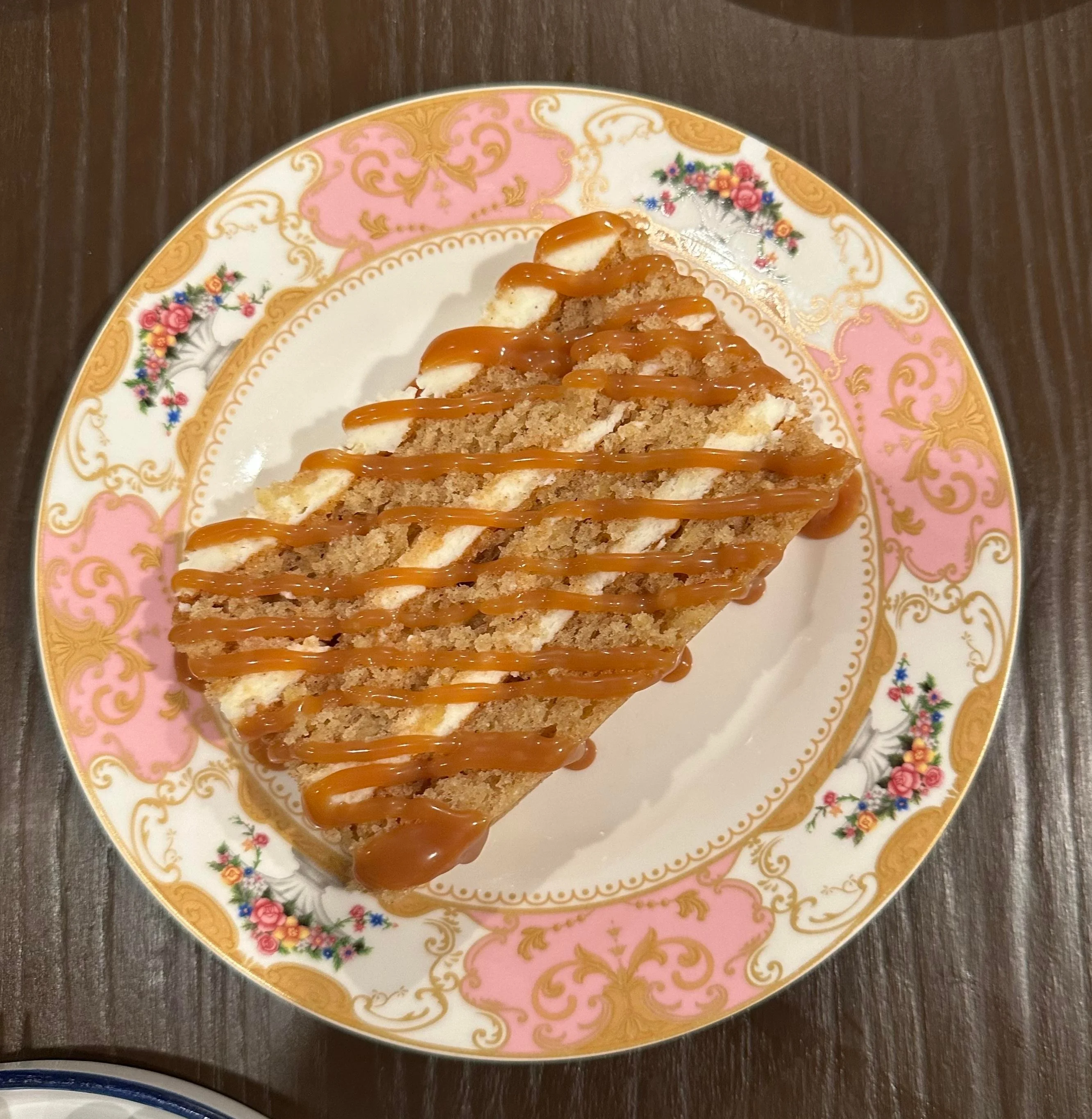
For dinner, North Shore Canteen in French River came recommended by staff at two earlier stops, and the room included several chefs from the shellfish festival. The menu changes with what’s coming in, spanning fish, shellfish, beef and potatoes. Beef tartare arrived in a generous portion, seasoned with capers, roasted garlic and freshly grated Parmesan, with Covered Bridge potato chips for scooping. A hanger steak with chimichurri and black garlic made a strong case for the island’s beef. Dessert was parsnip cake under caramel sauce, a more memorable finish than a familiar chocolate option.
Dinner: North Shore Canteen
Day three is a two-lunch argument
Green Gables Heritage Place was the essential non-food stop. Fans of L.M. Montgomery’s Anne of Green Gables can see the house and walk through the Haunted Wood and Lover’s Lane, then try a nonalcoholic raspberry cordial. A few hours on foot set up an ambitious afternoon: two lunches, each built around a different PEI specialty.
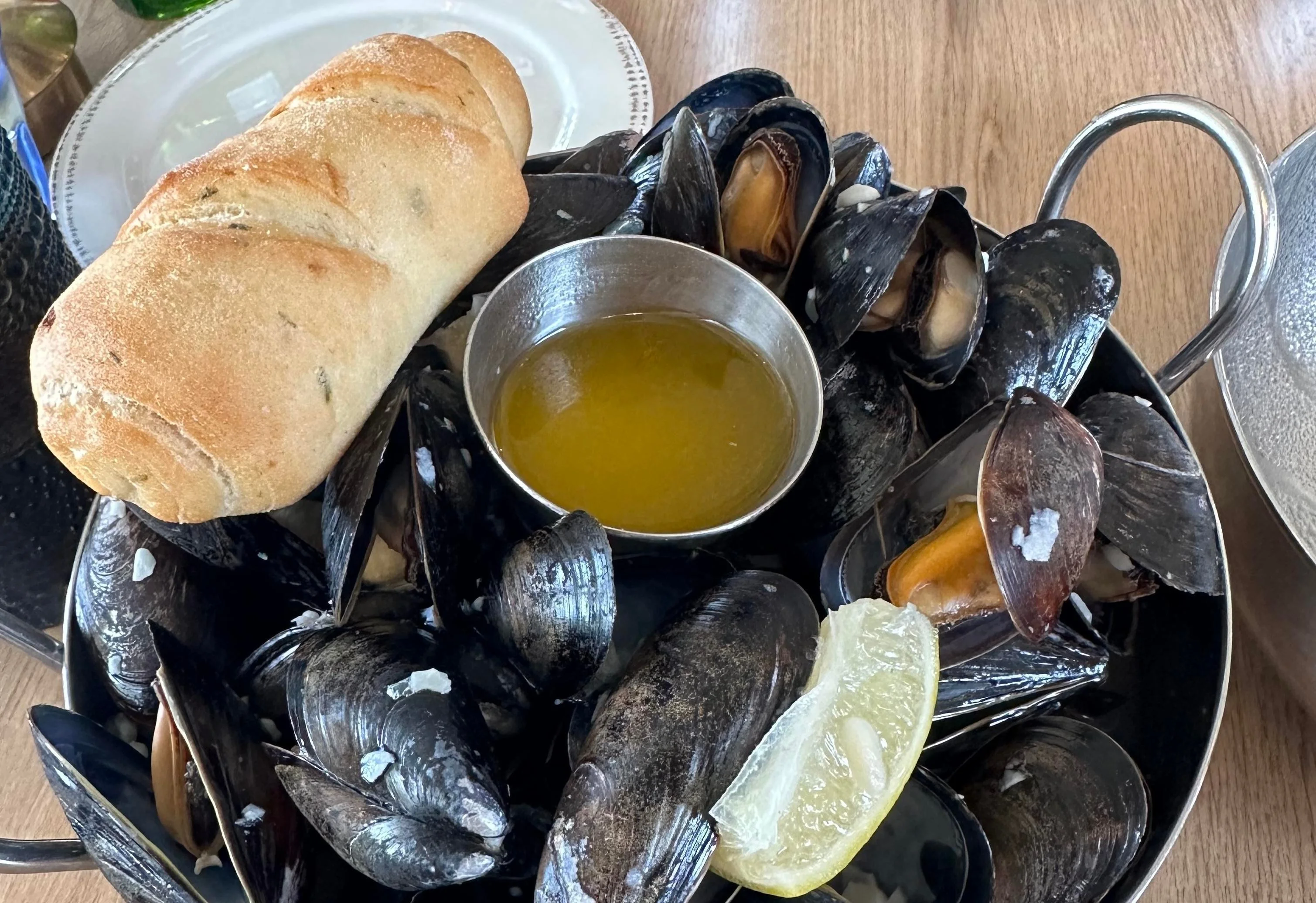
At Blue Mussel Café in Rustico Harbor, the signature mussels are the clear order. They arrive plump and fresh in a large stainless-steel bowl, prepared with rosemary and lemon or beer and wine. Both versions work; the rosemary brings a particularly welcome lift. A ramekin of melted butter comes alongside, though diners can decide how much belongs on each mussel. Seafood chowder, made with haddock, salmon, scallops, mussels and PEI potatoes, also looked popular, served with a large biscuit.
Lunch stops: Blue Mussel Café and Richard’s Fresh Seafood
Richard’s Fresh Seafood at Covehead Wharf delivered the trip’s most satisfying lobster roll. The long-running fish shack offers fish and chips on a deck overlooking the boats, while the nearby beach and lighthouse make an appealing place to eat outside. The roll itself is generously packed with sweet lobster, dressed with lemon and chive mayonnaise and small pieces of onion, then served in a buttery toasted bun. Crisp fries, coleslaw and ketchup complete the plate. The balance of tender meat, bright dressing and warm bread is what makes this version stand out.

The final dinner at Rustico Cannery brought a change of pace. Opened that spring, the airy restaurant has large windows and a deck facing the sunset over North Rustico Harbor. A crisp romaine salad with creamy, spicy charred-jalapeño dressing, lardons, Parmesan and sourdough crunchies provided much-needed greens. The pan-fried haddock, coated in panko and served with pickled beet remoulade, jalapeño relish, confit potatoes and coleslaw, was the more substantial order.
Dinner: Rustico Cannery
Cows Creamery made repeat visits easy, with locations around the island and ice cream made using milk from small local dairy farms. Coffee Cowrunch combines English toffee and Oreo; Cownadian Maple layers maple ice cream, maple swirl and maple-cookie pieces; and Messie Bessie mixes chocolate ice cream with Oreo, toffee and Cow Chips, the island’s thick potato chips coated in milk or dark chocolate. The range captures the itinerary’s broader appeal: familiar favourites taste more distinctive when they’re tied to local ingredients.
Ice cream: Cows Creamery
The strongest plan for a short PEI stay is to keep Charlottetown as a base, leave room for the coast and let local specialties shape the stops. Check opening dates before travelling in cooler months, since many restaurants and attractions operate seasonally. A few well-planned days are enough to sample the island’s range, but the lobster roll, oysters and mussels make a convincing case for coming back.