Tavern-style pizza is traveling well because it answers two restaurant needs at once: diners want crisp, shareable food, and operators want rooms where people feel comfortable staying for another drink. The Midwestern staple’s spread is also changing how people talk about Chicago pizza. Deep-dish may be the city’s best-known export, but for many locals, a thin pie cut into squares is the more familiar order.
A weekly pizza, not a special occasion
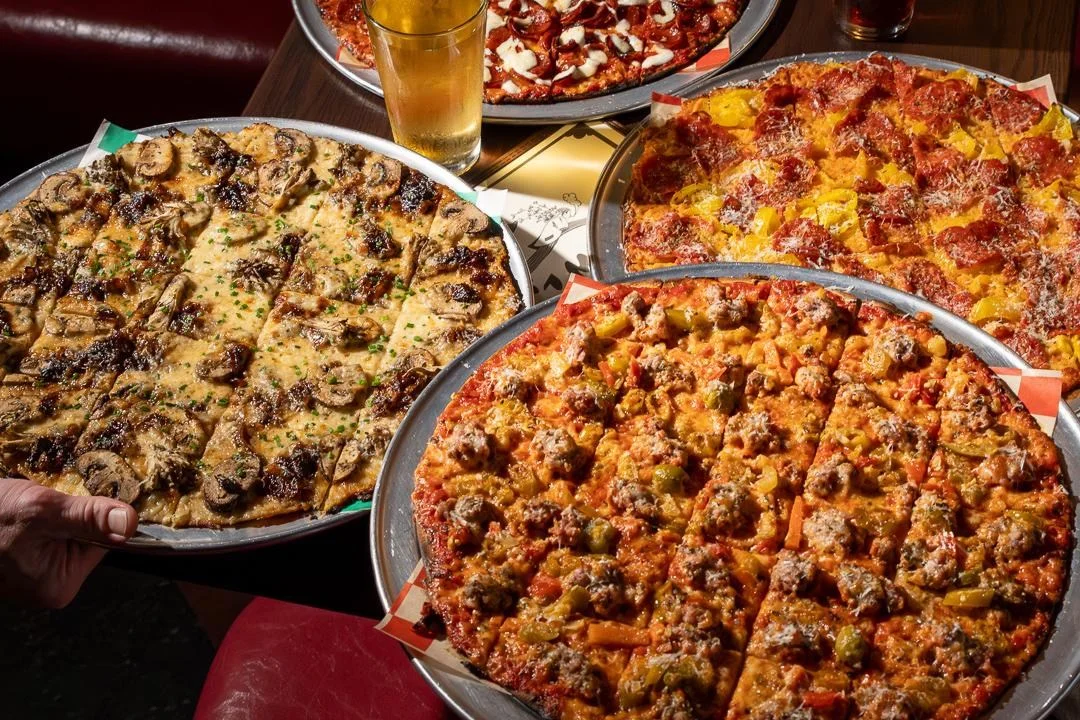
Brittany and Brennan Grosvenor grew up in Chicago’s suburbs and now serve thin-crust pizza at Proof in Portland, Oregon. At home, the choice on a Friday night was straightforward: “thin-crust, deep-dish, or double-dough,” Brittany recalls. The restaurant sells the style she knew best, though it now uses the term “tavern-style,” which has become more familiar to diners outside the Midwest.
That wider label can obscure how ordinary the pizza is for the people who grew up with it. Deep-dish draws visitors, Brittany says, but isn’t what many Chicago-area families eat most often. “The pizza you get every week, or if you go to a kid’s birthday party, it’s always tavern-style.” That distinction helps explain why the style’s expansion carries a regional note: restaurants are introducing a familiar local habit to customers who may know Chicago mainly for its taller, heavier pie.
The details vary across the region. Chicago, Milwaukee, Minnesota, and St. Louis each have thin-crust traditions with their own devotees; St. Louis is often treated as a distinct style. The shared traits are a crisp, thin base and a grid cut that turns a pie into small squares. Sauce can skew sweet or spicy depending on the shop. The defining experience is lightness and crunch.
That texture offers a clear counterpoint to the thick, airy Detroit-style pizza that drew national attention in the late 2010s. Writing in Esquire in 2023, Omar Mamoon described tavern-style as “a foil” to Detroit’s substantial slices. The contrast gives restaurants room to add a different kind of pizza to a crowded market: one built for grazing, passing around, and pairing with a drink.
Small squares, built for the table
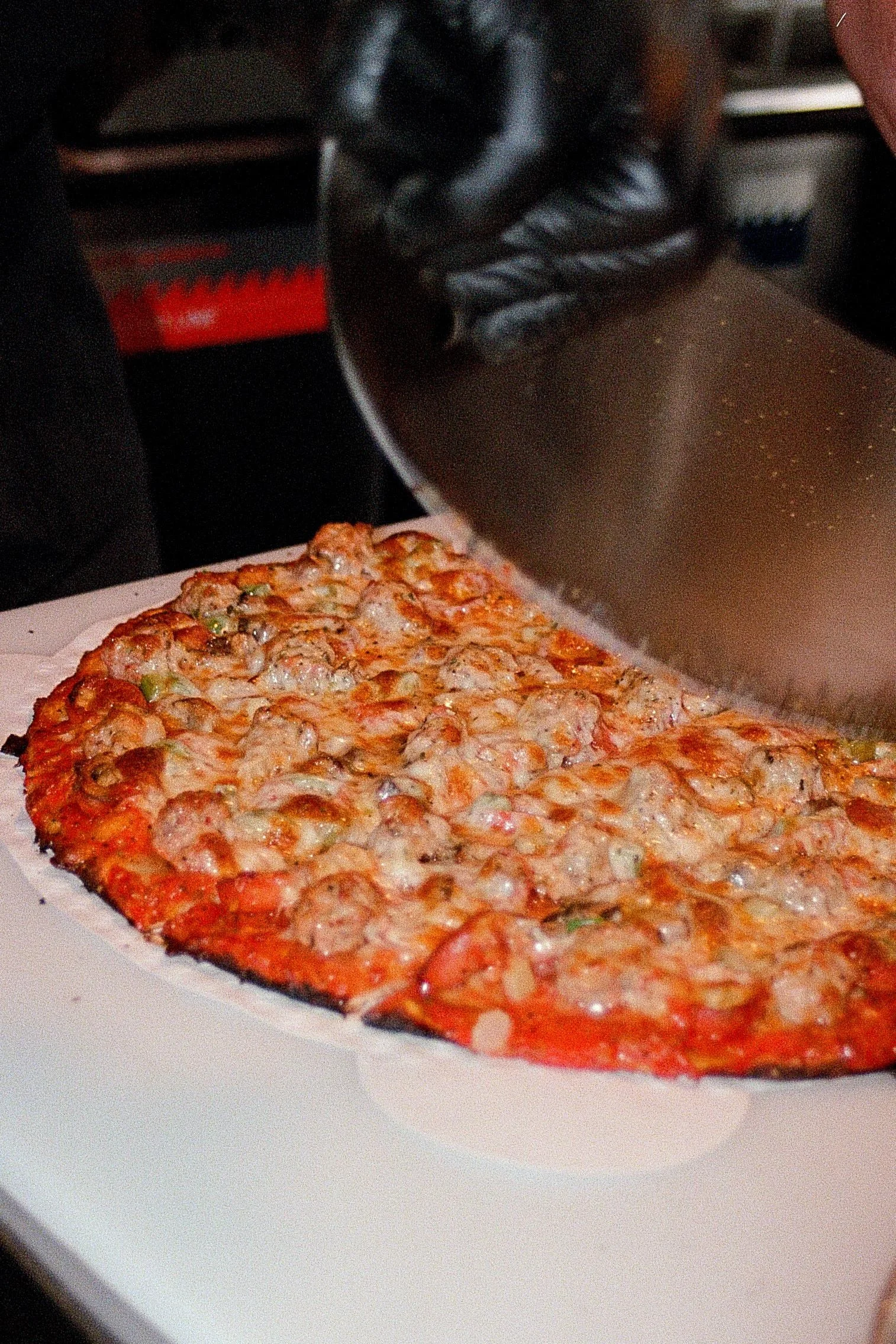
Bradley Shorten, who runs Kim’s Uncle Pizza in Westmont, Illinois, and the recently opened La Merna in Washington, D.C., sees the cut as central to the format. A grid produces more pieces than the usual triangular slices, making it easy for a group to share. The squares also fit on a cocktail napkin, which suits a bar setting.
For Shorten, a well-made pie gives each square a little of every topping, with ingredients reaching the edge. The corner pieces can be less evenly balanced, he says, yet they’re often the first to go. “Everybody goes for” the corners, particularly when the pizza comes from Chicago. That small detail captures the style’s appeal: it’s casual food with a particular logic, designed around the way a group actually eats.
Restaurants have been leaning into that social setting as interest in taverns has grown. New York’s Keepers, One Trick Pony in Fort Worth, Texas, Tillie’s Tavern Pizza in Wheat Ridge, Colorado, and Chicago’s Zarella and Dimmi Dimmi Corner Italian are among the businesses putting tavern-style pizza on the menu. Chicago has long had plenty of it; the newer openings are bringing the format to other cities.
That growth also gives Midwesterners a chance to make the case for their own pizza traditions. Chicagoans can point beyond deep-dish, while residents of other Midwestern cities can stake a claim for their versions of a thin, square-cut pie. The conversation can get spirited, particularly around the differences between regional styles, but the spread itself suggests that diners don’t need a single definitive version to enjoy the category.
Adaptation matters more than strict tradition
Mike Fadem faced that question when he opened a second location of Ops, his New York pizzeria known for wood-fired, Neapolitan-inspired pies with spotted crusts and soft dough. Fadem is from St. Louis and wanted to add the very thin pizza he grew up eating. He’s also clear-eyed about its divisive reputation: “it’s maybe not the best version of tavern pizza,” he says, pointing to critics of the St. Louis style and its use of provel, a gooey processed cheese.
Fadem describes the family tree as a sequence of reinterpretations: St. Louis pizza grew from thin-crust Chicago pizza, which in turn drew from Neapolitan pizza. Each version departed from what came before. One Ops employee brought another point of reference, having grown up with New Jersey’s thin-crust bar pizza. The bar pies around Boston offer another regional tradition.
Rather than copy any one model, Fadem wondered, “can we make an Ops version of this?” His answer, called “tavernetta,” draws on the restaurant’s sourdough and his interest in whole-grain flavor, while aiming for the crisp texture he thinks New Yorkers respond to. His research eventually led him to Milwaukee for the pizza he liked best. Tavernetta has joined the restaurant’s other pies instead of replacing them; most groups order at least one alongside their usual choices. That’s a useful sign for operators: a new regional style can add to a menu without demanding that customers abandon the format they already know.
Pizza as a reason to stay
At Los Angeles cocktail bar Bar Next Door, food became part of the plan when the business marked its third anniversary in June. Before then, customers could bring in pizza from neighboring Prince Street Pizza, whose co-owner Lawrence Longo is a partner in the bar. Owner and bar director Brynn Smith wanted a lighter option than a large slice. “After having a slice, sometimes you get a little full and you’re like, I want to go to bed,” she says.
The bar’s answer was a set of “bar pies,” made for the venue by Prince Street. Smith’s stated aim was to give customers a reason to remain longer and order another drink. In that setting, the pizza’s modest portions and crisp base are part of its job: it can keep a table occupied without making the evening feel like a full dinner. The name on the menu reflects the bar’s identity, while the style fits the practical demands of the room.
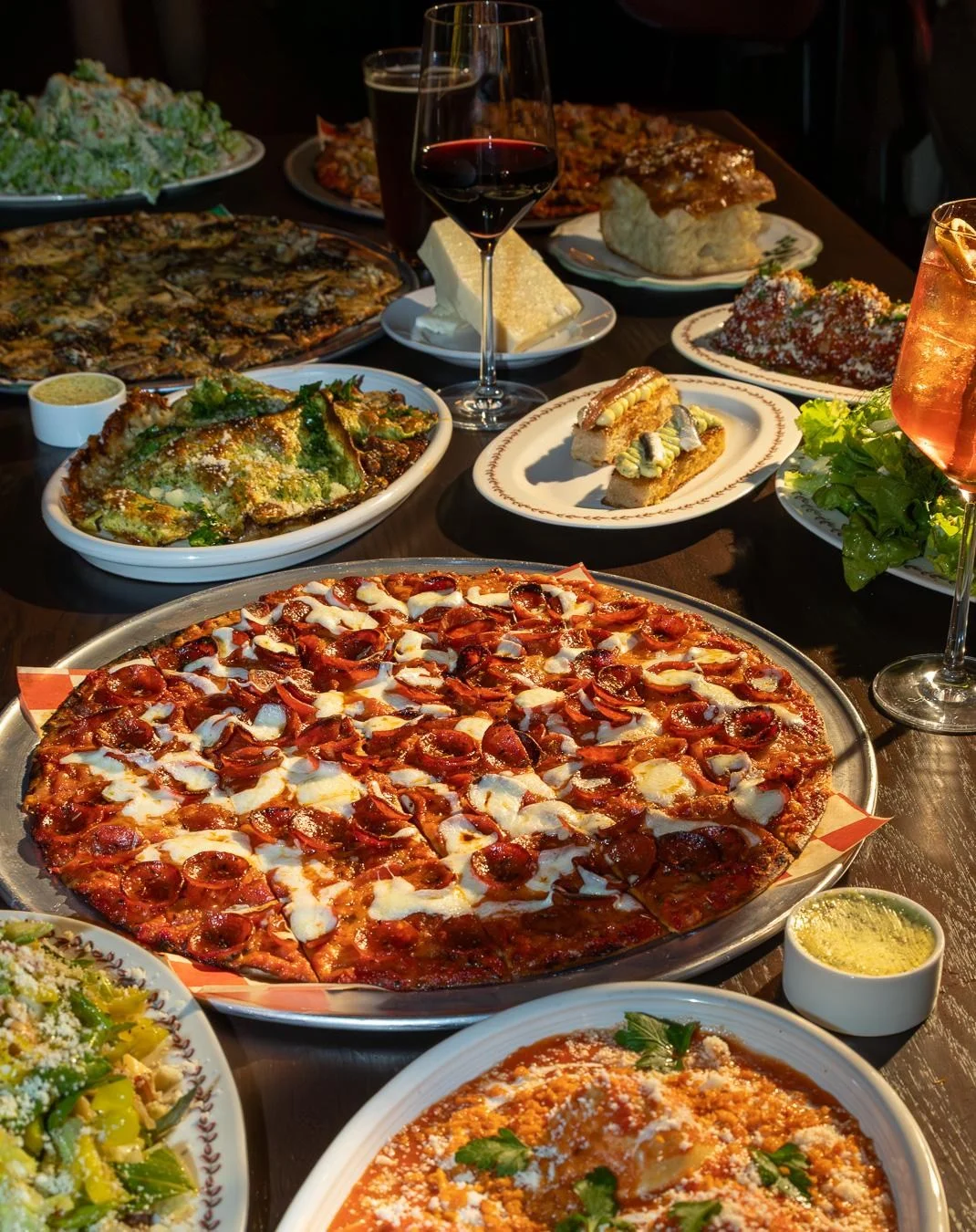
Shorten’s La Merna makes the connection between food and setting more explicit. He runs the Washington restaurant with his wife, Meg Schmitt, who grew up in St. Louis. Their target was the atmosphere of a Chicago dive bar or a Wisconsin supper club: wood-paneled walls, checkered floors, red leather booths, pitchers of beer, and pizza meant to be shared at an unhurried pace.
The appeal of the tavern, then, extends beyond nostalgia for a particular crust. Restaurants have been returning to cozy, lived-in rooms where customers can settle in without much ceremony. A hometown pizza shop fits naturally into that idea: familiar food, familiar surroundings, and a table that invites people to stay. The style’s square cut makes that invitation tangible, since nobody needs to claim a whole slice or wait for a formal serving.
That sense of place is also shaping Proof’s menu in Portland. The Grosvenors have added Midwestern favorites including Bosco sticks, the stuffed breadsticks served in school cafeterias, and Italian beef with giardiniera. They could find individual Chicago-area specialties around town, Brennan says, but not always all in one place. Their goal is to recreate the broader experience: “If you went into a tavern in Chicago, what could you order there?”
That may be the clearest explanation for tavern-style pizza’s wider reach. Its crisp crust and easy-to-share squares travel well, but the restaurants selling it are also offering a particular kind of evening. The strongest versions will make the pizza feel at home in their own city while keeping the Midwestern instincts behind it: feed the group, keep the table comfortable, and leave room for one more round.