A repeat look with a clear point of view
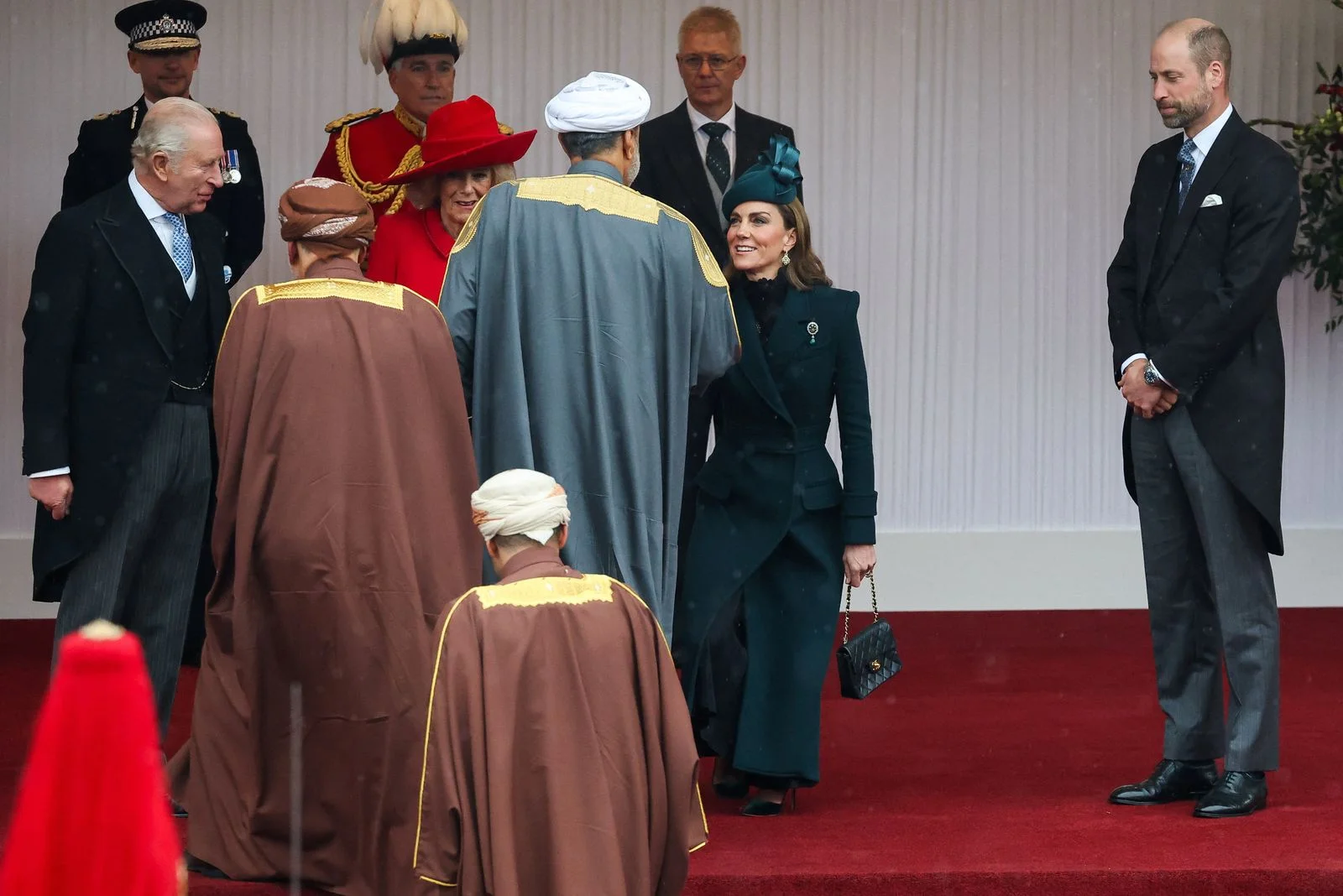
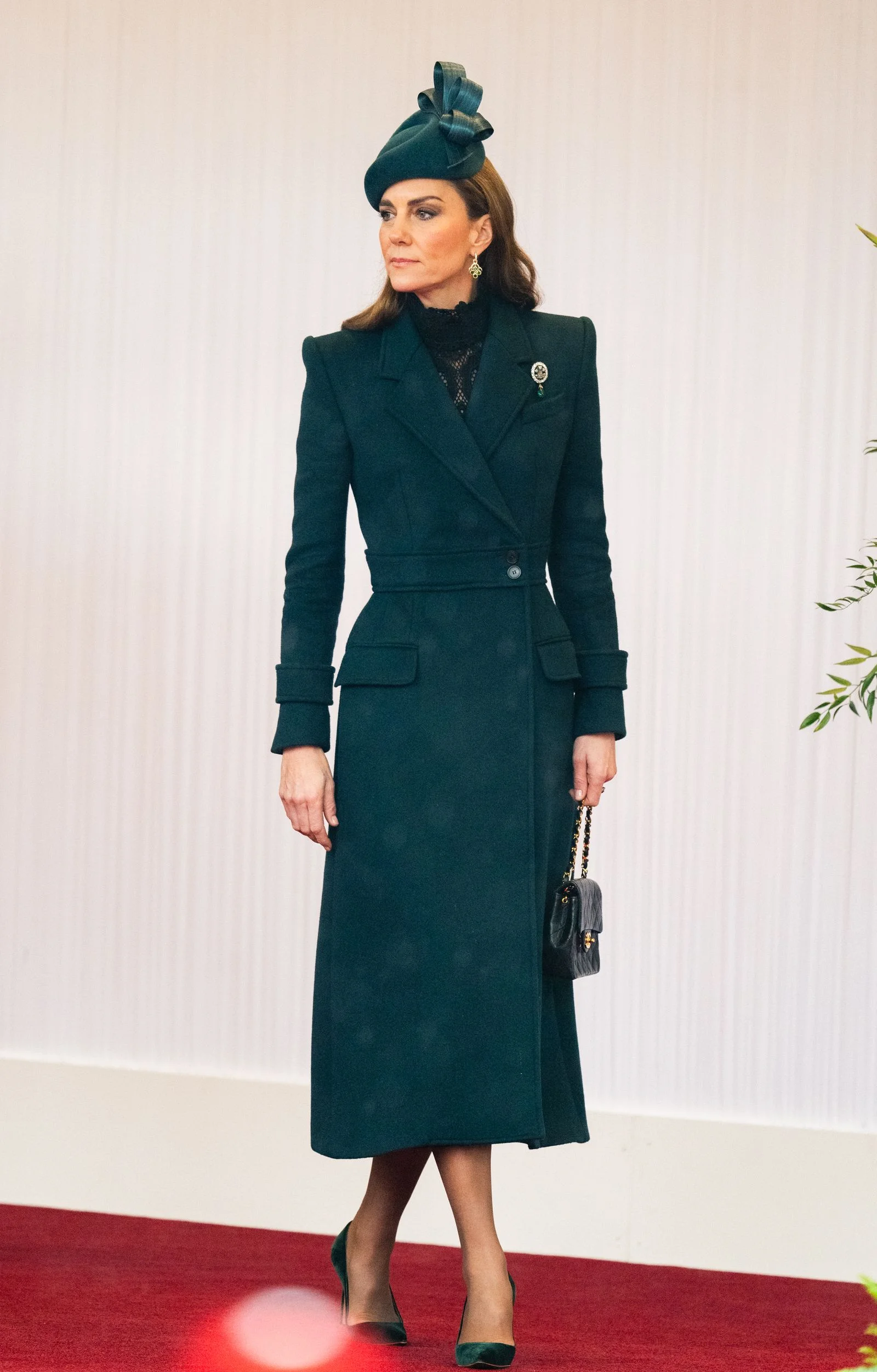
Catherine’s latest official look makes a case for repeat wear: at Windsor Castle, she paired a familiar Chanel flap bag with a bottle-green Alexander McQueen coat, previously worn for the Irish Guards’ St Patrick’s Day parade. The choice puts a known piece back in view while giving it a different role. A coat that has already appeared at a ceremonial parade now frames an official welcome, and the bag shifts attention from the idea of a completely new outfit to the decisions involved in styling one.
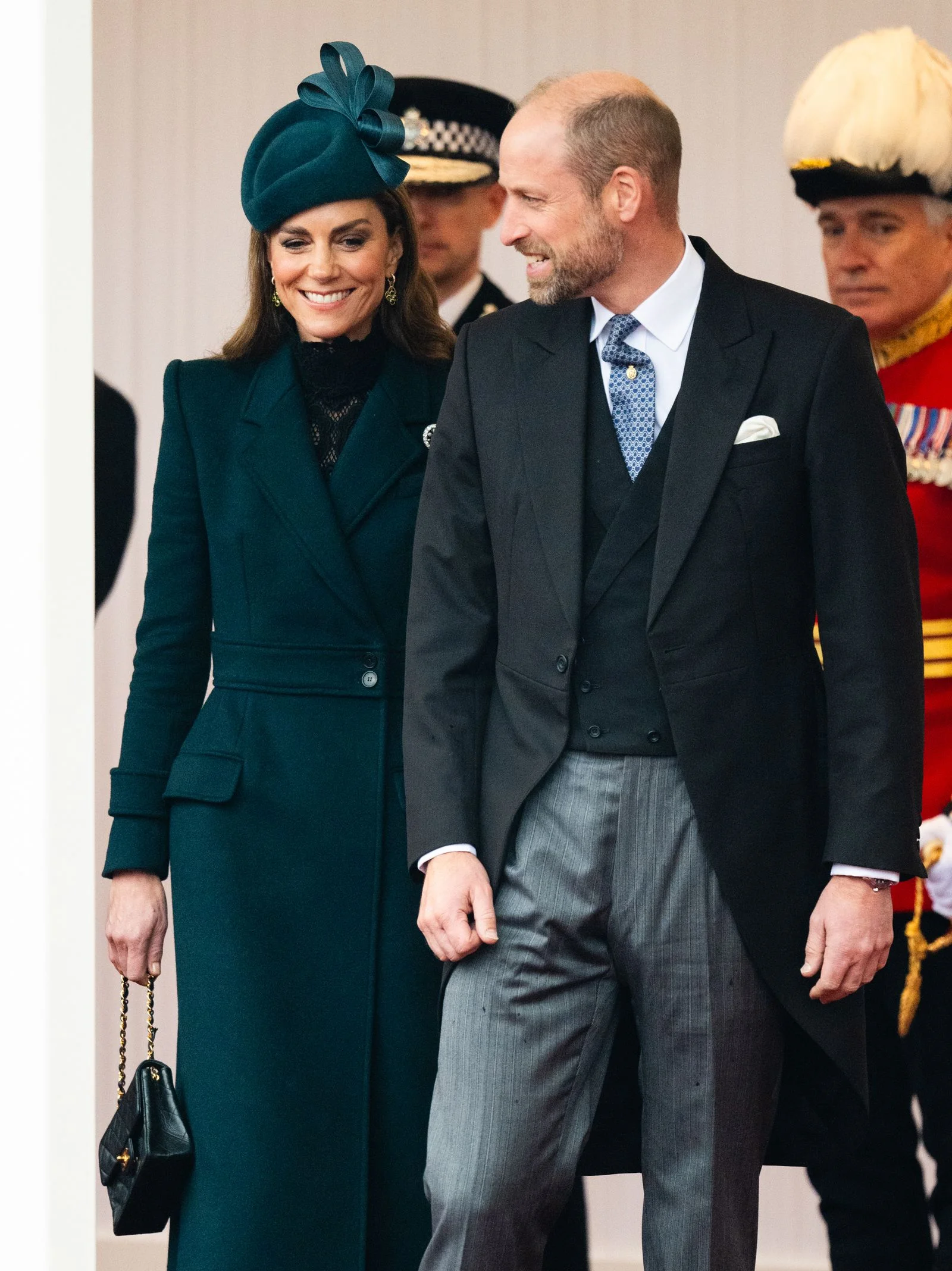
The Princess of Wales wore the ensemble while welcoming the Sultan of Oman on the first day of his three-day state visit. The coat anchors a wardrobe that regularly returns to British labels including Alexander McQueen, Emilia Wickstead and Burberry. Here’s the detail that gives the outfit a seasonal edge: the Chanel bag’s soft, crumpled shape puts a personal spin on a classic accessory. That contrast is doing practical visual work, too. The coat supplies a strong, formal outline; the bag interrupts it with a less rigid shape.
This is more significant than it looks. Public appearances invite close attention to clothing, but repeat wear also changes the terms of the conversation: a familiar garment can be assessed for how it’s used, not simply whether it’s new. There’s a useful distinction between repeating an outfit exactly and returning to a piece that can be combined with other elements to create a different impression. Here, the coat is the known quantity, while the bag’s relaxed finish gives the pairing a fresh emphasis.
A familiar bag, worn differently
Catherine first carried the “squashed” Chanel flap bag in spring, at the enthronement ceremony for Dame Sarah Mullally. Its relaxed finish was among the season’s talked-about styling details; this time, the contrast with the structured green coat keeps the look polished without making it feel overly formal. The bag’s familiar design gives it a recognizable starting point, while its softened shape changes the mood. It reads less like a pristine accessory held apart from daily use and more like an item with some character.
That tension between polish and ease is central to the outfit. A formal coat can carry much of the visual weight in a public appearance, especially when its color and cut make it a clear focal point. A softer bag then prevents the overall effect from becoming too uniform. It doesn’t erase the ceremonial setting; it makes the styling feel less prescribed. And yet, the result still depends on restraint: the accessories and coat aren’t competing for attention.
(and this is the part most people overlook) A repeat accessory can change how a repeat garment is read. The coat may be familiar from an earlier appearance, but pairing it with a bag whose shape is notably relaxed offers a new cue to the viewer. That’s a modest styling adjustment, not a wholesale reinvention. In fashion coverage, that distinction matters: the interest here lies in the relationship between pieces, rather than a claim that every item is new.
Formal clothes and everyday choices
Her recent off-duty choices have included Barbour jackets and Me+Em knitwear. With a busy schedule of official engagements ahead, the state visit offers a fresh look at the formal pieces she returns to—and at how a well-worn accessory can give a repeat outfit a new emphasis. The distinction between those settings is useful: clothing chosen for an official welcome has different demands from the pieces worn away from public duties, even when both draw on familiar labels and recognizable wardrobe staples.
If you’re working in this space, the outfit is a reminder that repetition can be part of a considered public style. It can make a wardrobe feel coherent, while also giving observers a way to compare how a piece works in different contexts. That doesn’t mean every repeat appearance carries a hidden message. Sometimes the more persuasive reading is also the simpler one: a coat remains useful, and a change in styling helps it feel current to the occasion.
Here’s the thing: the outfit’s appeal rests on a balance that’s easy to describe and harder to achieve. The green coat provides structure and continuity; the Chanel flap bag introduces softness and a less formal note. Neither element has to overwhelm the other. The effect is polished, but it leaves room for the accessories to look lived in.
What the repeat says about the wardrobe
The state visit puts that balance in a formal setting, where clothes are likely to be read as part of the occasion as well as personal style. A repeated coat can convey consistency without requiring a new look for every appearance. The bag adds a point of difference, but the evidence available here supports a measured conclusion: Catherine has returned to a familiar coat and paired it with an accessory whose crumpled shape changes the overall feel.
That said, the wider implication is less about a trend forecast than about how a wardrobe works over time. Similar public wardrobes often rely on pieces that can serve across multiple engagements, with styling choices doing some of the work of making a repeat feel distinct. The approach can be practical and visually legible. It also keeps attention on the quality of the combination, rather than on novelty alone.
A quieter kind of refresh. The coat has a prior appearance; the bag’s softened finish gives the pairing its seasonal edge. For readers watching how formal dressing adapts to repeated use, that’s the detail to take away: familiarity can hold an outfit together, while one changed texture or shape gives it room to feel new again.