How far would you go for the latest food craze? In New York City, food enthusiasts are forming lines as early as 6 a.m. for viral sensations like TikTok-famous dot cakes from Butterfield Market. This trend isn't merely a passing phase; it highlights an ongoing phenomenon where waiting in line has transitioned from a mundane task to a sought-after service, supported by a plethora of social media exposure.
Enter the realm of professional line sitters—individuals who are compensated for standing in line for anything from theater tickets to limited-edition food items. Robert Samuel, a seasoned line waiter and founder of Same Ole Line Dudes, has witnessed immense growth in this unique business model over the past 15 years. "Social media has made the concept much more visible, leading to increased demand," Samuel shared in a recent interview.
Samuel's entrepreneurial journey began with the iconic Cronut, a pastry that catapulted his line-sitting business into existence. His services, routinely in demand, now consist of a team of about 35 line sitters active across the city, equipped to handle requests of all sorts. Each line sitter commands a fee of $25 an hour, but extra charges come into play for rush orders and certain conditions, such as weather or holidays. Demand peaks during specific product launches or food trends, leading to lines that not only wrap around the block but also command a financial premium.
One of the notable evolutions in this sector has been the emergence of freelance line sitters. Websites like TaskRabbit allow people to list themselves as available for "line-sitting" tasks, often at a competitive rate—between $28 and $90 per hour. Cities like New York lead in the number of available freelancers, but major urban centers like Los Angeles and San Francisco are also setting up their own line-sitting contingent.
A quick search on TaskRabbit reveals thousands of line sitters ready to fulfill requests. For instance, Korem A., a line sitter in Los Angeles, guarantees diligence, stating, "I’ll wait for you like I would for myself." This promise of responsibility and communication is key to attracting clients who trust their chosen sitter to handle valued items such as the coveted dot cakes or gourmet dinners.
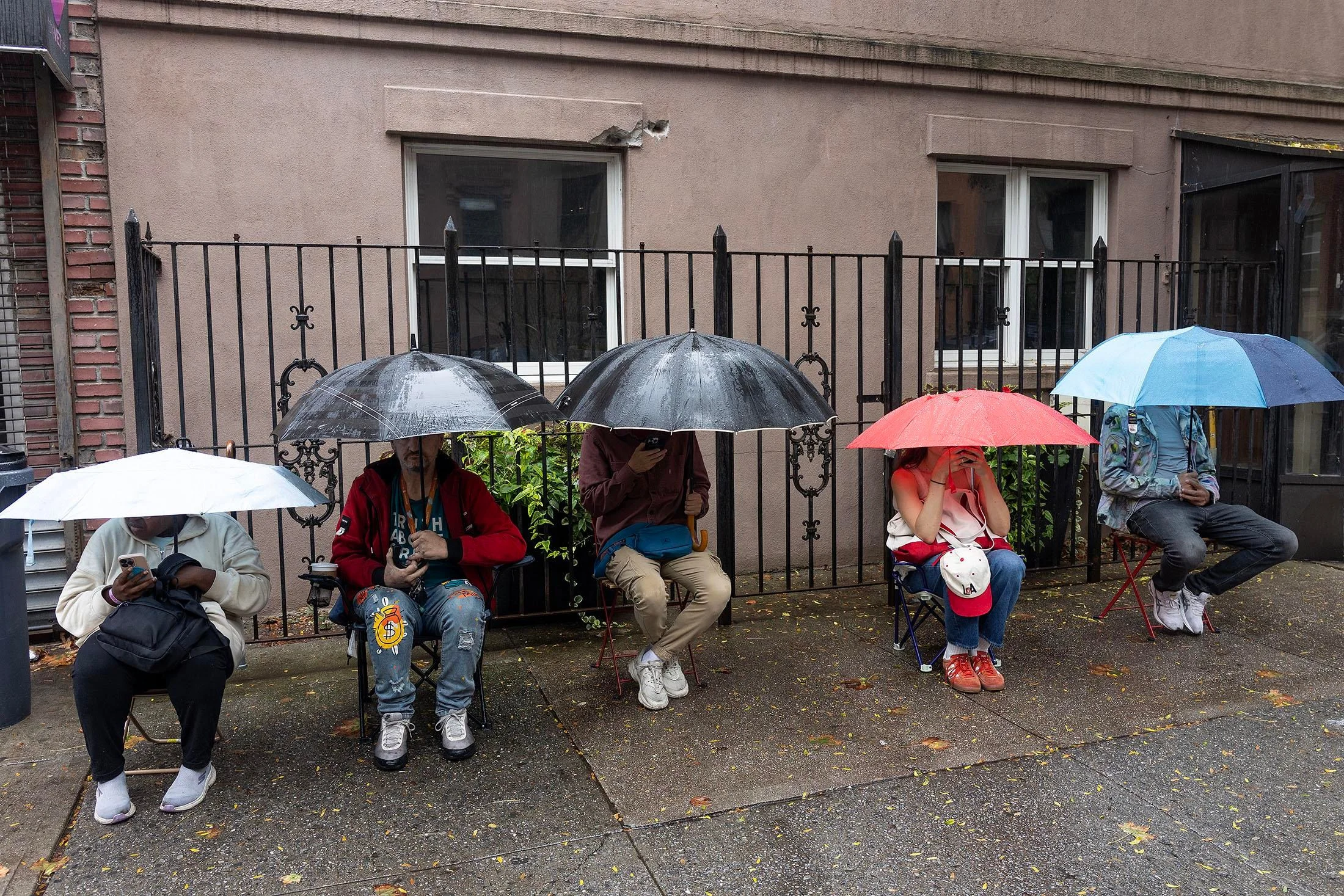
Requests through Same Ole Line Dudes often lean towards Italian dining and popular pizza spots. Samuel recounts a particularly memorable assignment where he deployed multiple sitters to secure a dozen Cronuts for an important business meeting. While not every restaurant embraces the legitimacy of professional line sitters, many establishments have accepted this new normal; maintaining a blend of traditional waiting with professional efficiency heralds a shift in dining culture.
However, some establishments have pushed back against the concept, citing a preference for natural patrons over hired sitters. Samuel sees this as incongruous, comparing it to sending an assistant to put a name down at a restaurant—just good business practice in an increasingly impatient world. While some resist this shift, others have adapted, accommodating the steady influx of line sitters through their doors.
Yet, not all is smooth sailing for those in the line-sitting business. Samuel notices that while demand for his services has remained high, the rise of food delivery services has complicated matters. People who previously relied on line sitters for hard-to-get items may now opt to simply have their orders delivered instead. This evolution, he's noticed, affects client retention, as certain once-loyal customers have disappeared into the world of convenience.
Despite these challenges, there's no denying the thriving demand for line sitters, especially within the highly competitive NYC food scene. Samuel acknowledges that for every cancellation or change in preference, there's a new trend just waiting to emerge. "This is New York," he states. "Something will always pop up." The growth of social media and a growing appetite for culinary adventures ensures the line-sitting profession is far from obsolete.
Ultimately, Samuel humorously reflects on how his profession impacts public perception of waiting in line. "It’s like asking a doctor to do surgery for free," he quips, explaining that waiting in line is a service now commoditized, with expectations that it can be handled with care and professionalism. The juxtaposition of once mundane waiting now transformed into an opportunity for economic gain illustrates a fascinating shift in consumer culture.
As the popularity of line-sitting evolves, it seems our collective patience may have a price, turning the simple act of waiting into a burgeoning industry defined by social media perceptions, personal connections, and a love for all things delicious.